Life at Stanford

An Afternoon at Lake Lagunita: Birds, Good Company, and a Few Surprises

1 view

An afternoon with the Stanford Birdwatching Club at Lake Lagunita: small birds, patient company, and two unexpected guests in the grass.

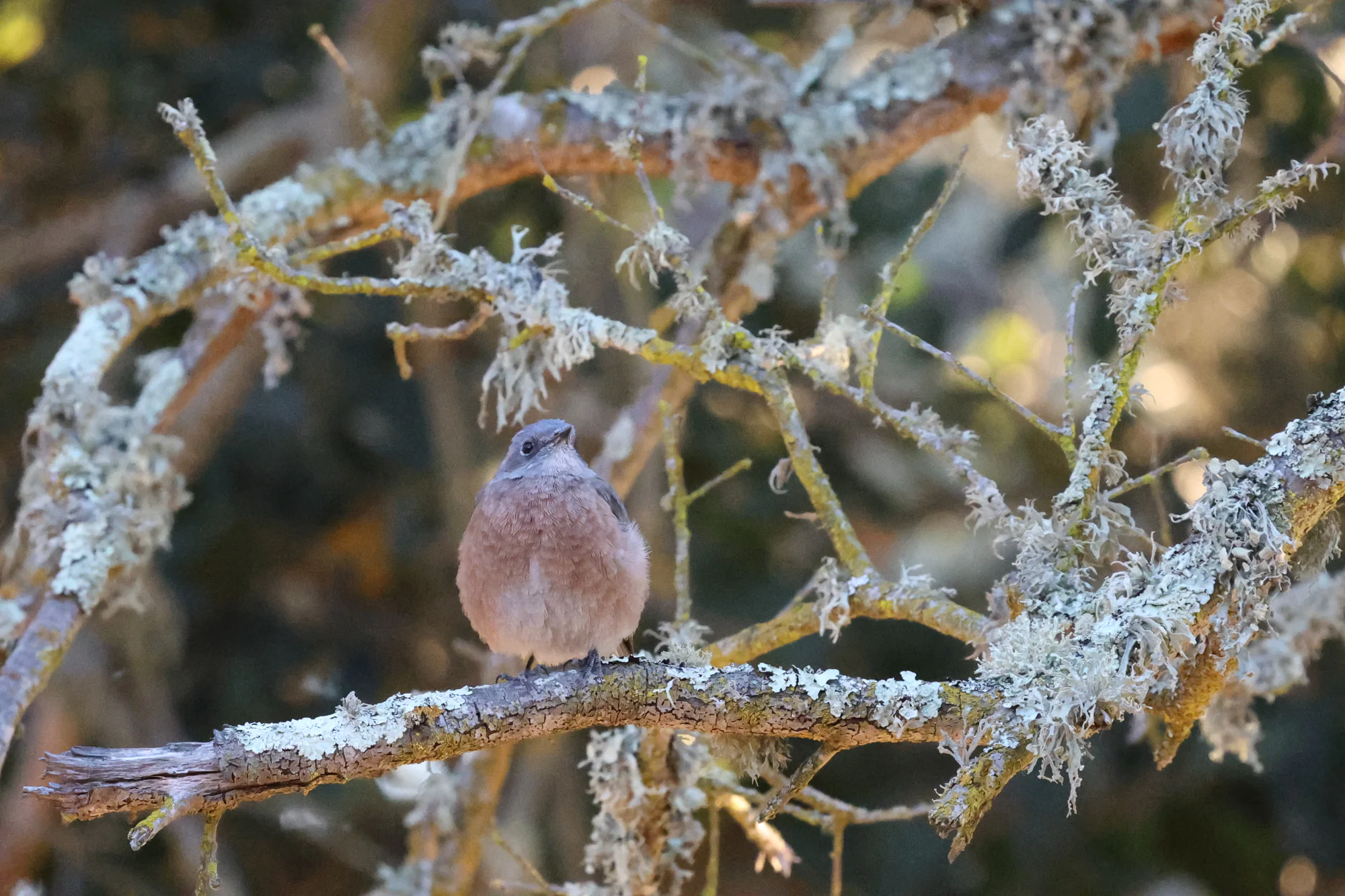
A round Western Bluebird with a blue-grey head and rusty breast perched among branches covered in pale lichen.
Western Bluebird (Sialia mexicana). A round little companion on a beautifully lichen-covered perch.

This afternoon, I joined the Stanford Birdwatching Club for a walk around Lake Lagunita, right here on campus. A camera, some sunshine, and a group of people happy to stop and look into the trees: a very pleasant addition to my Stanford routine. The birds had their own plans, of course. We simply tried to keep up.
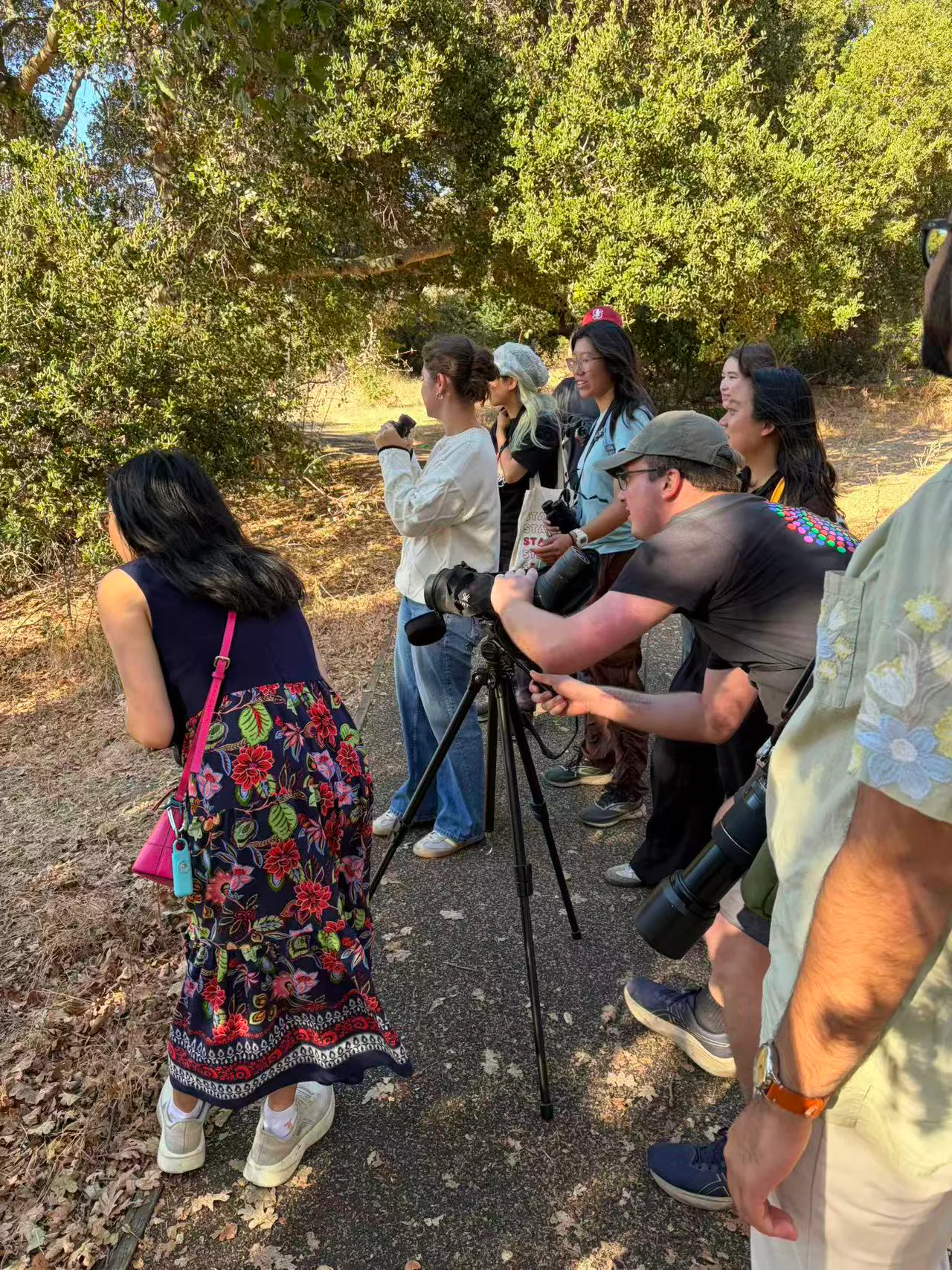
Members of the Stanford Birdwatching Club gathered on a tree-lined path with binoculars, cameras and a tripod-mounted spotting scope.
Good company at Lake Lagunita: the Stanford Birdwatching Club, with binoculars, cameras, and plenty to look at.

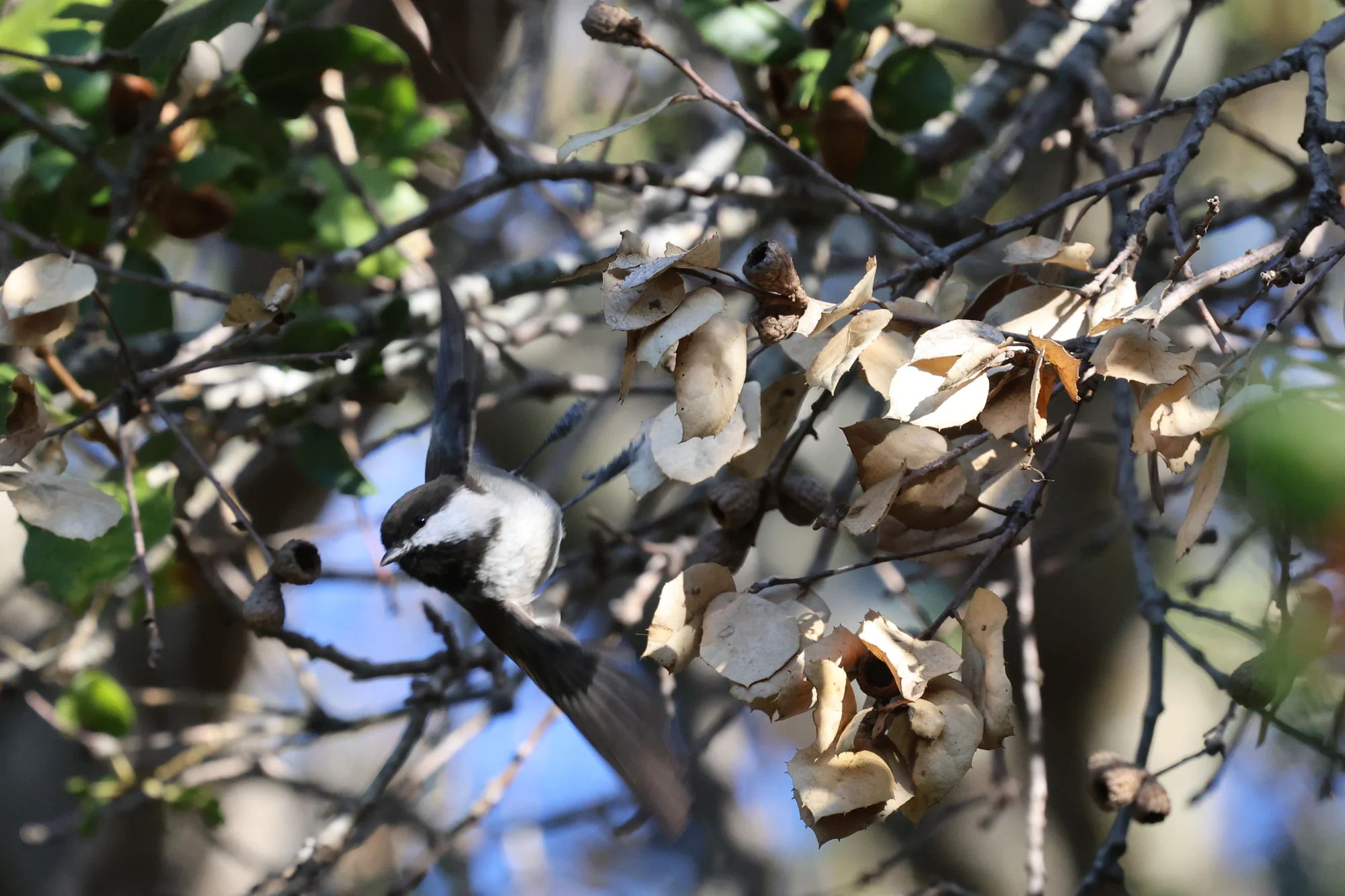
Birdwatching gives an ordinary patch of greenery a surprising amount of depth. A small movement becomes a chickadee; a moment later, the same bird is hanging at an improbable angle among the branches. Looking through these photographs, I especially like the contrast between all that busy foliage and the tiny faces peering out of it. The chickadees make staying still look terribly overrated.
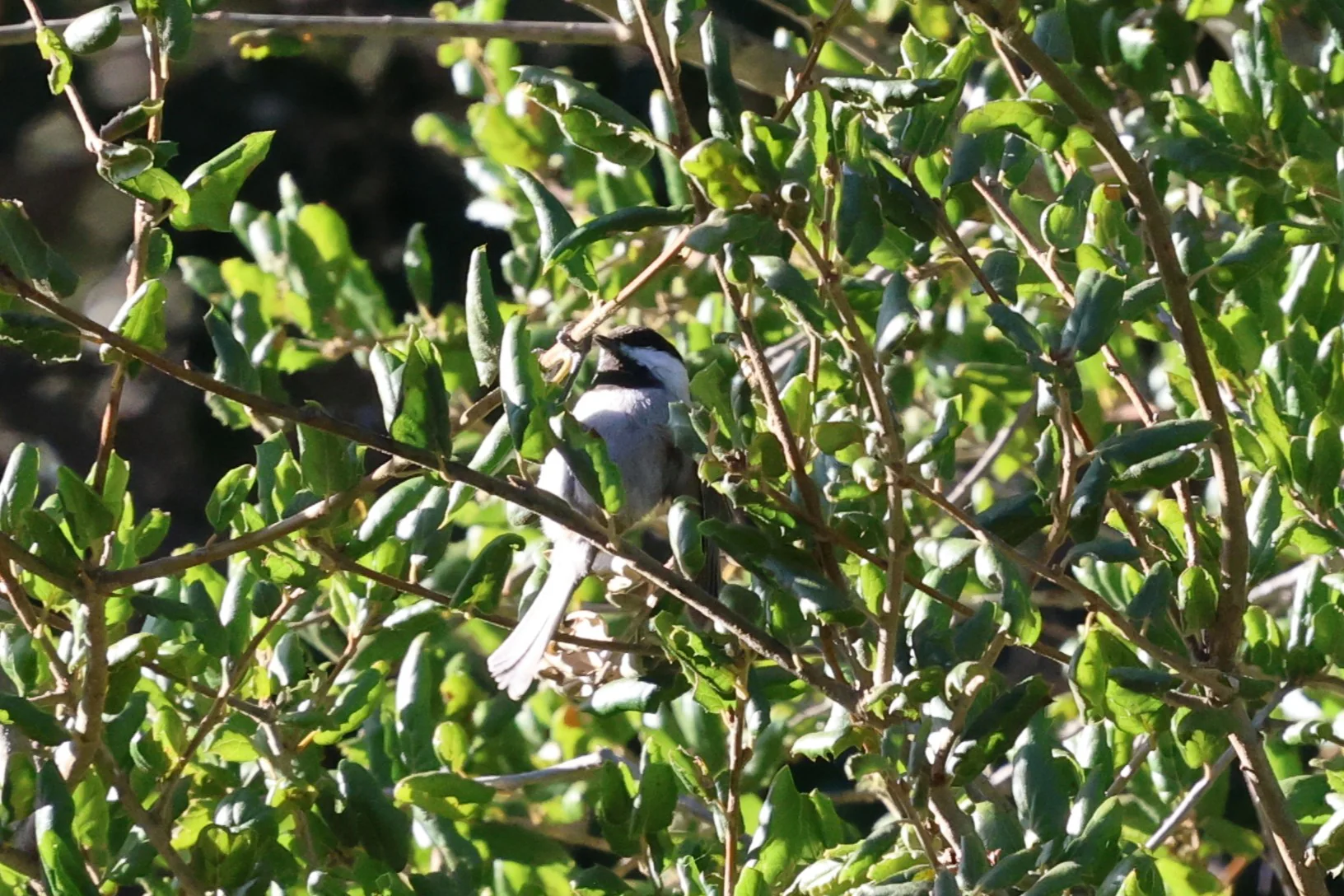
A Chestnut-backed Chickadee with a dark cap and white cheek perched among sunlit green leaves.
Chestnut-backed Chickadee (Poecile rufescens). A tiny face peeking out of a very leafy afternoon.
A Chestnut-backed Chickadee twisting between branches with its wings open among curled dry leaves.
Chestnut-backed Chickadee (Poecile rufescens). A little acrobat, with absolutely no interest in holding the pose.

Lower down, a White-crowned Sparrow wore a wonderfully neat set of head stripes, a California Towhee blended into the fallen leaves, and a Dark-eyed Junco offered the camera a rather dignified back view. It is a useful reminder for a photographer: being interested in a bird does not oblige the bird to be interested in you.
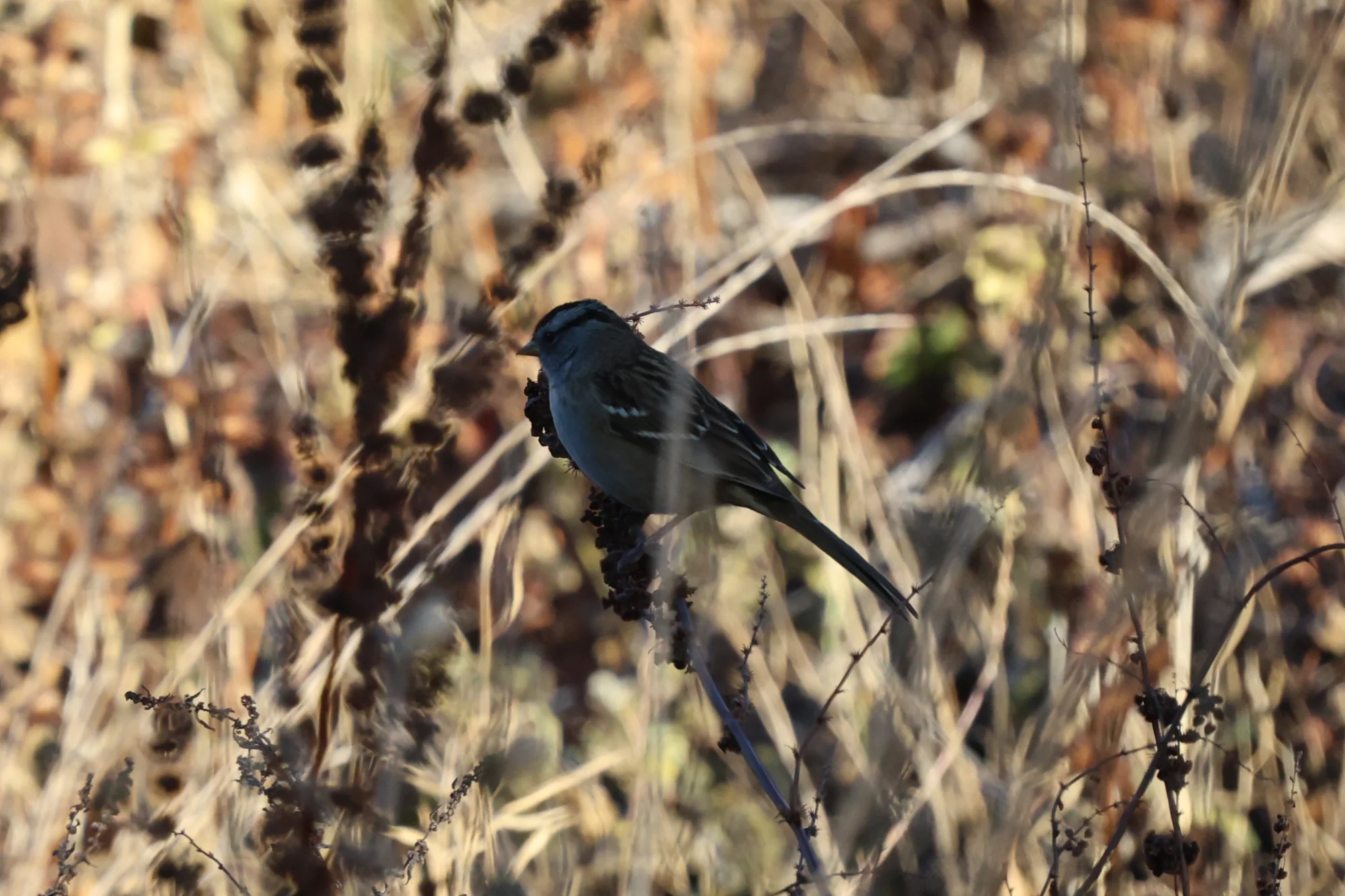
A White-crowned Sparrow with black-and-white head stripes perched on a dry seed stalk.
White-crowned Sparrow (Zonotrichia leucophrys). Excellent head stripes, even in the shade.
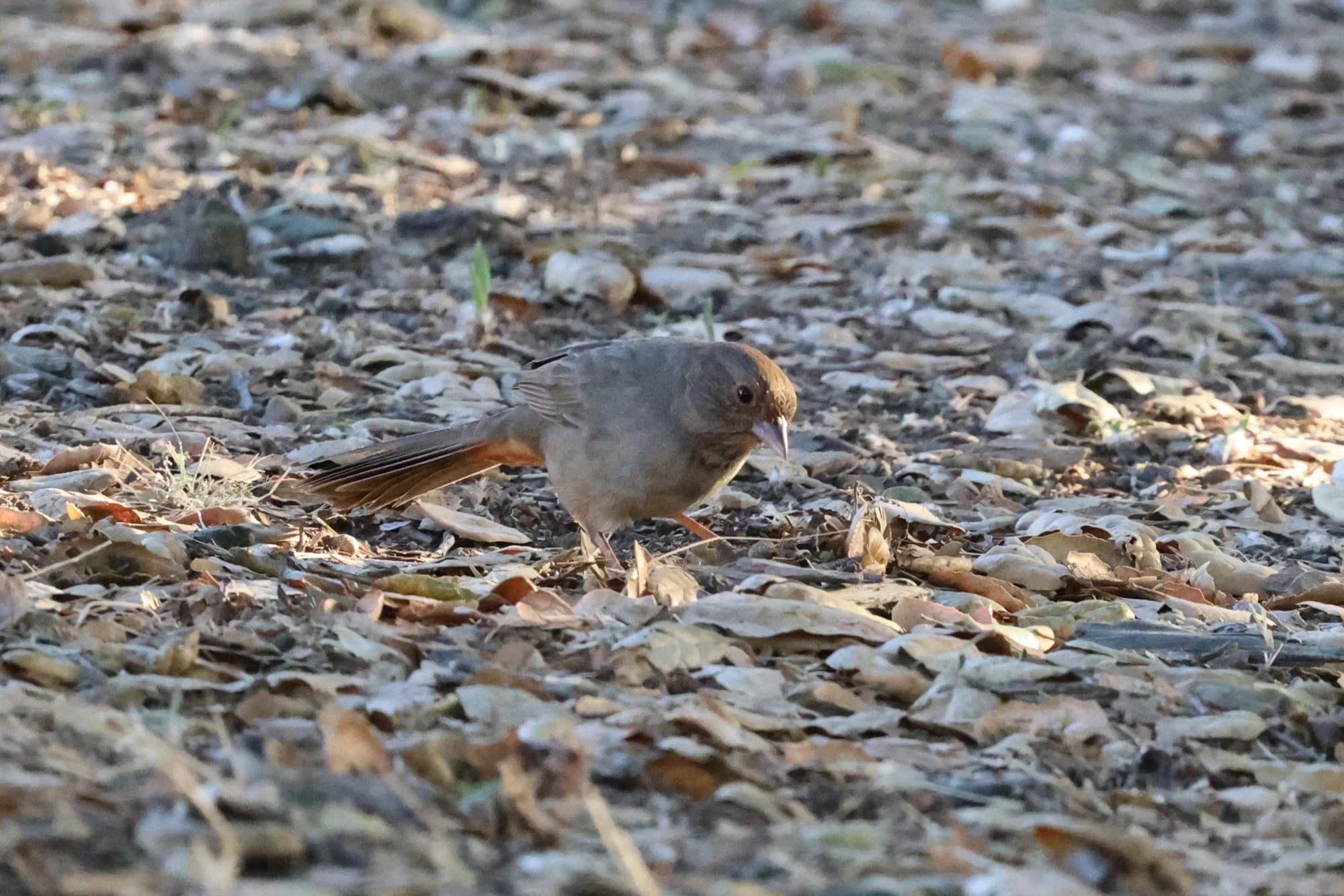
A grey-brown California Towhee standing among dry fallen leaves, with rusty colour beneath its tail.
California Towhee (Melozone crissalis). Perfectly dressed for a walk through the fallen leaves.
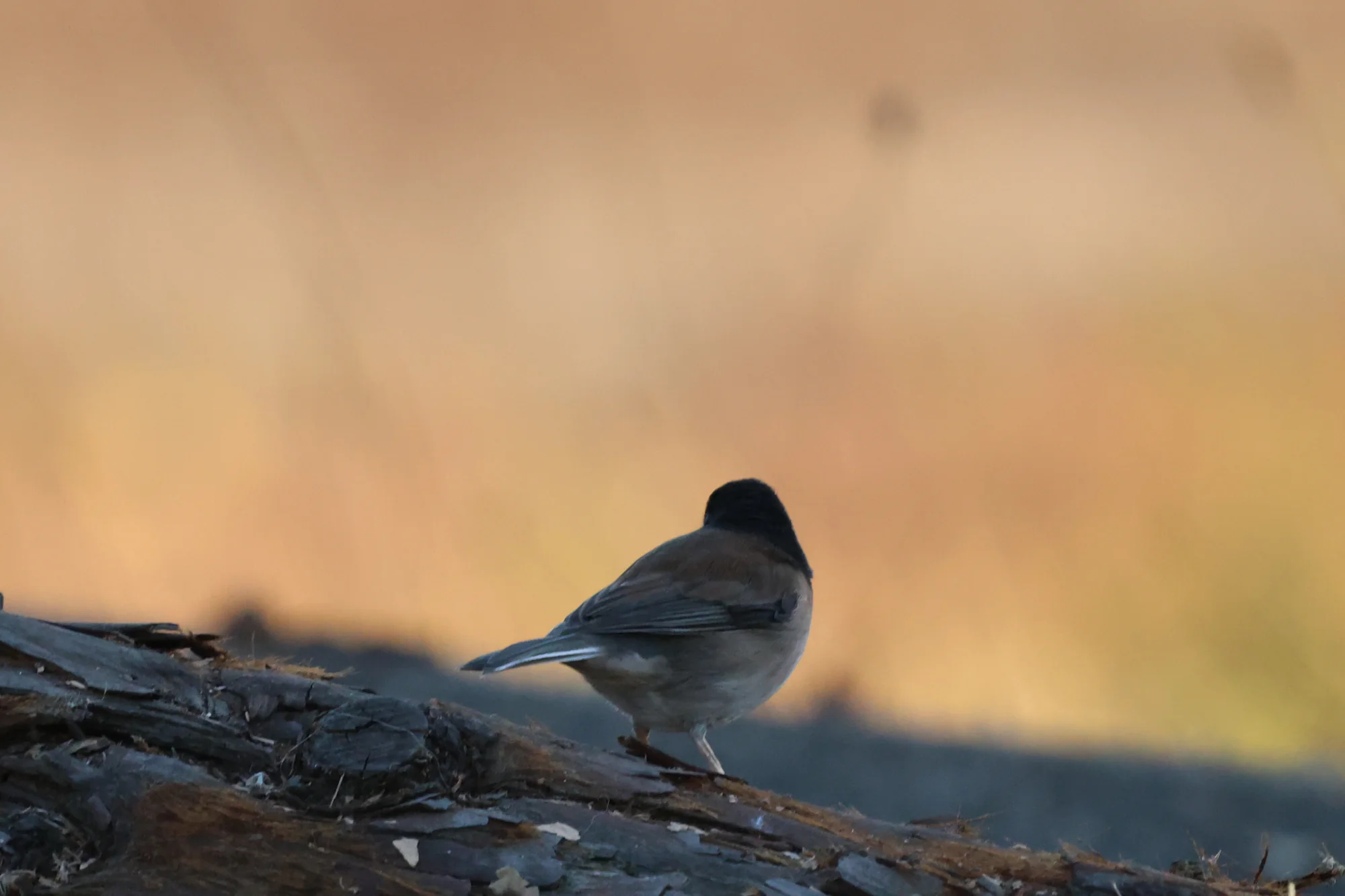
A Dark-eyed Junco seen from behind on a fallen log, showing a dark hood, brown back and pale outer tail feathers.
Dark-eyed Junco, Oregon form (Junco hyemalis). A dignified back view; portraits are apparently optional.

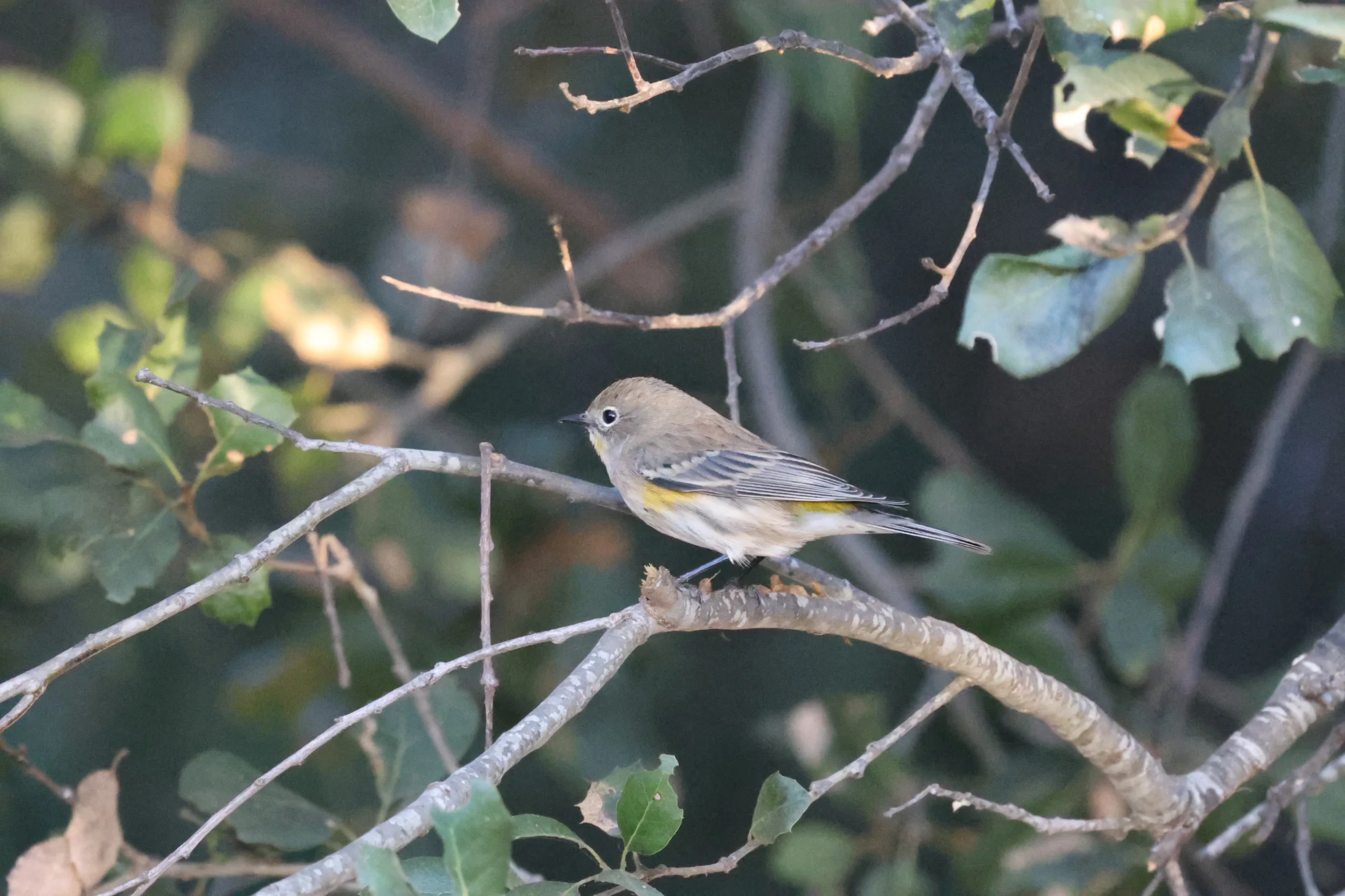
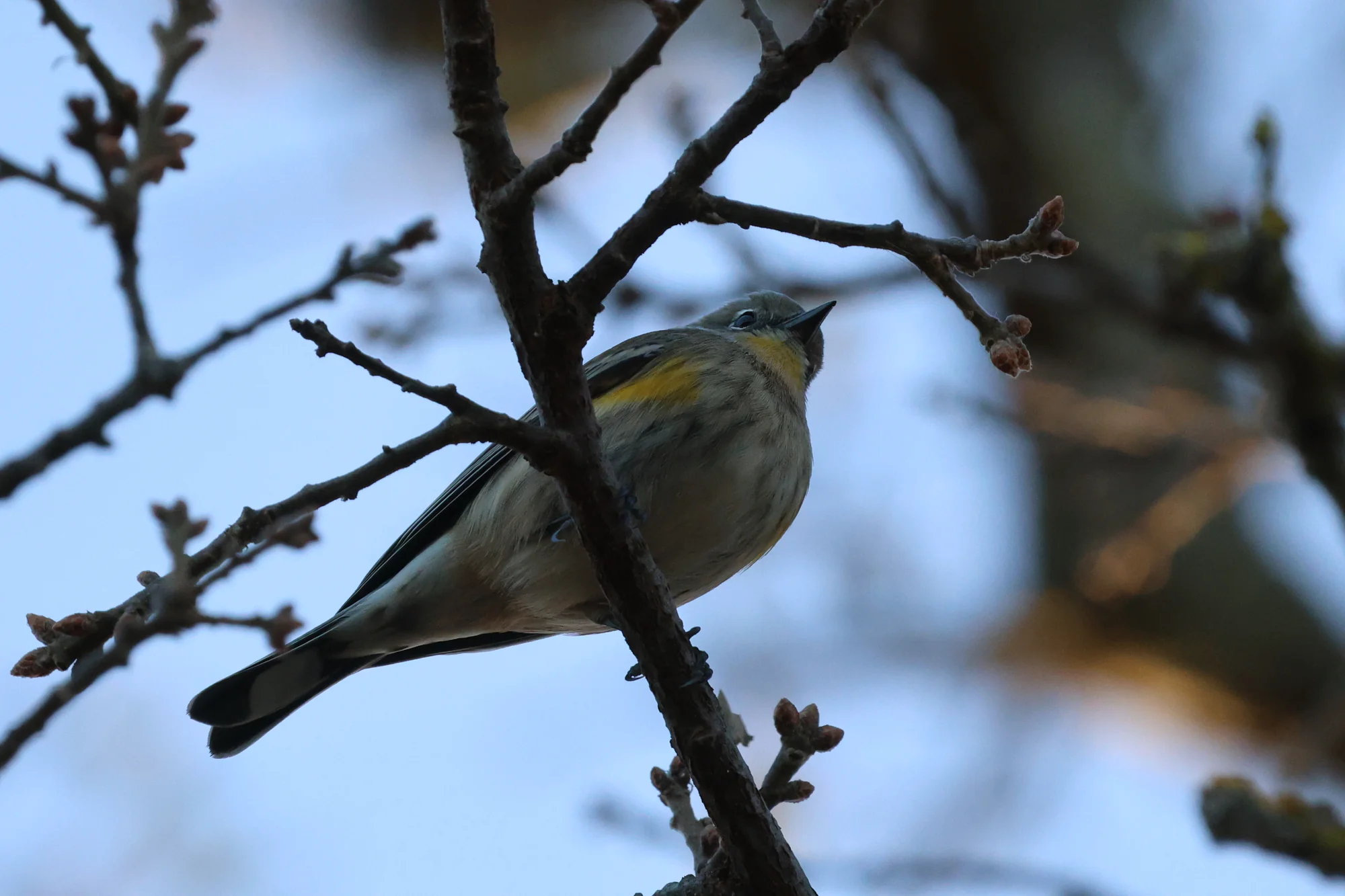
The Yellow-rumped Warblers added little flashes of yellow to the afternoon. These birds show the yellow throat associated with the western Audubon’s form, along with bright patches on their sides. One photograph even catches the yellow rump that gives the species its name. A helpful naming system, once the bird agrees to show the relevant part.
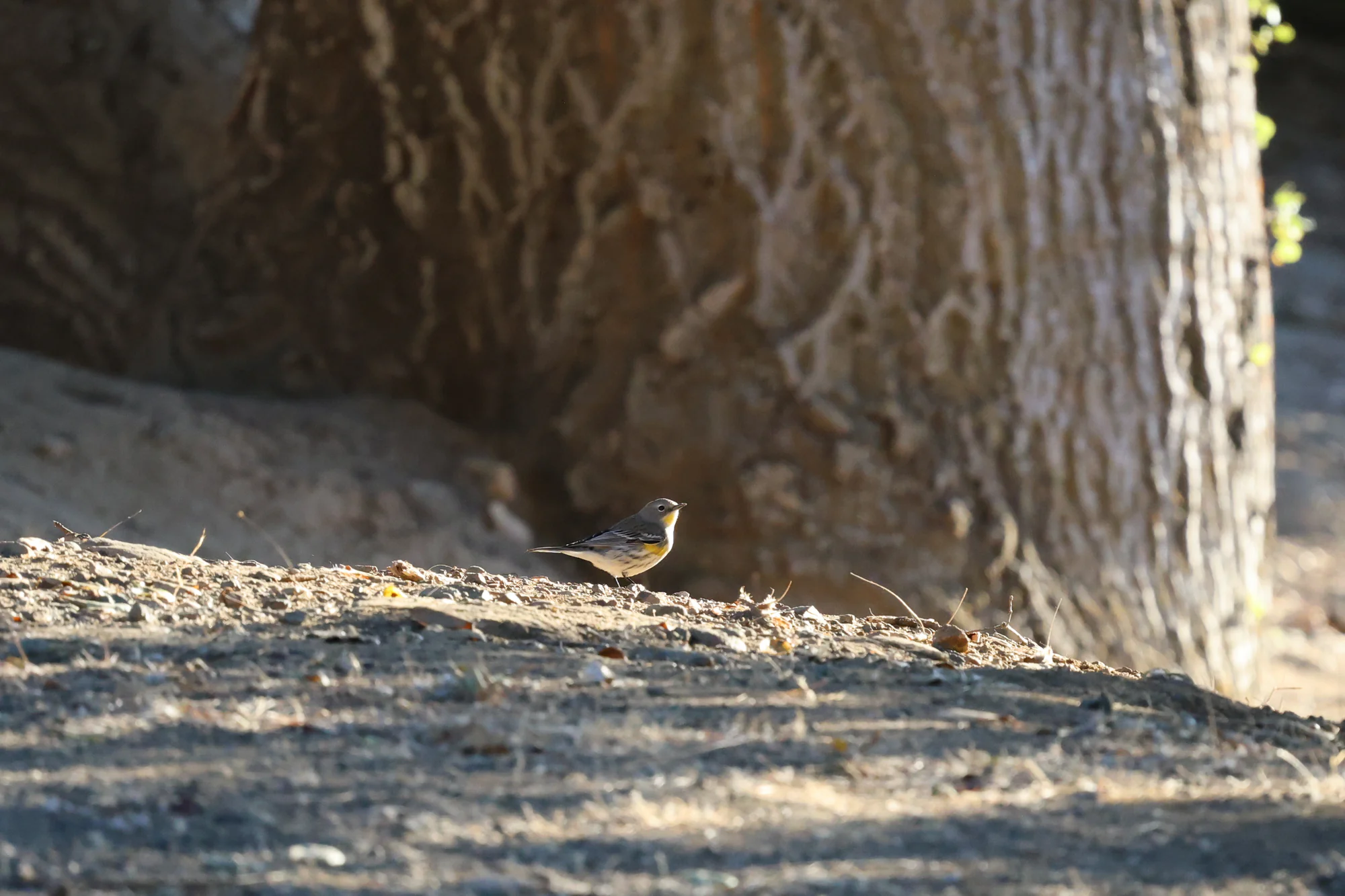
A small Yellow-rumped Warbler with a yellow throat and side patch standing in sunlight near the base of a large tree.
Yellow-rumped Warbler, Audubon’s form (Setophaga coronata). A small splash of yellow beneath a very large tree.
A Yellow-rumped Warbler viewed from below, perched on a twig with a yellow throat and yellow patch on its side.
Yellow-rumped Warbler, Audubon’s form (Setophaga coronata). A yellow throat, a round belly, and a seat among the twigs.
A Yellow-rumped Warbler in side profile on a branch, showing a bright yellow rump, yellow side patch and pale eye ring.
Yellow-rumped Warbler, Audubon’s form (Setophaga coronata). This time, the yellow rump makes a proper appearance.

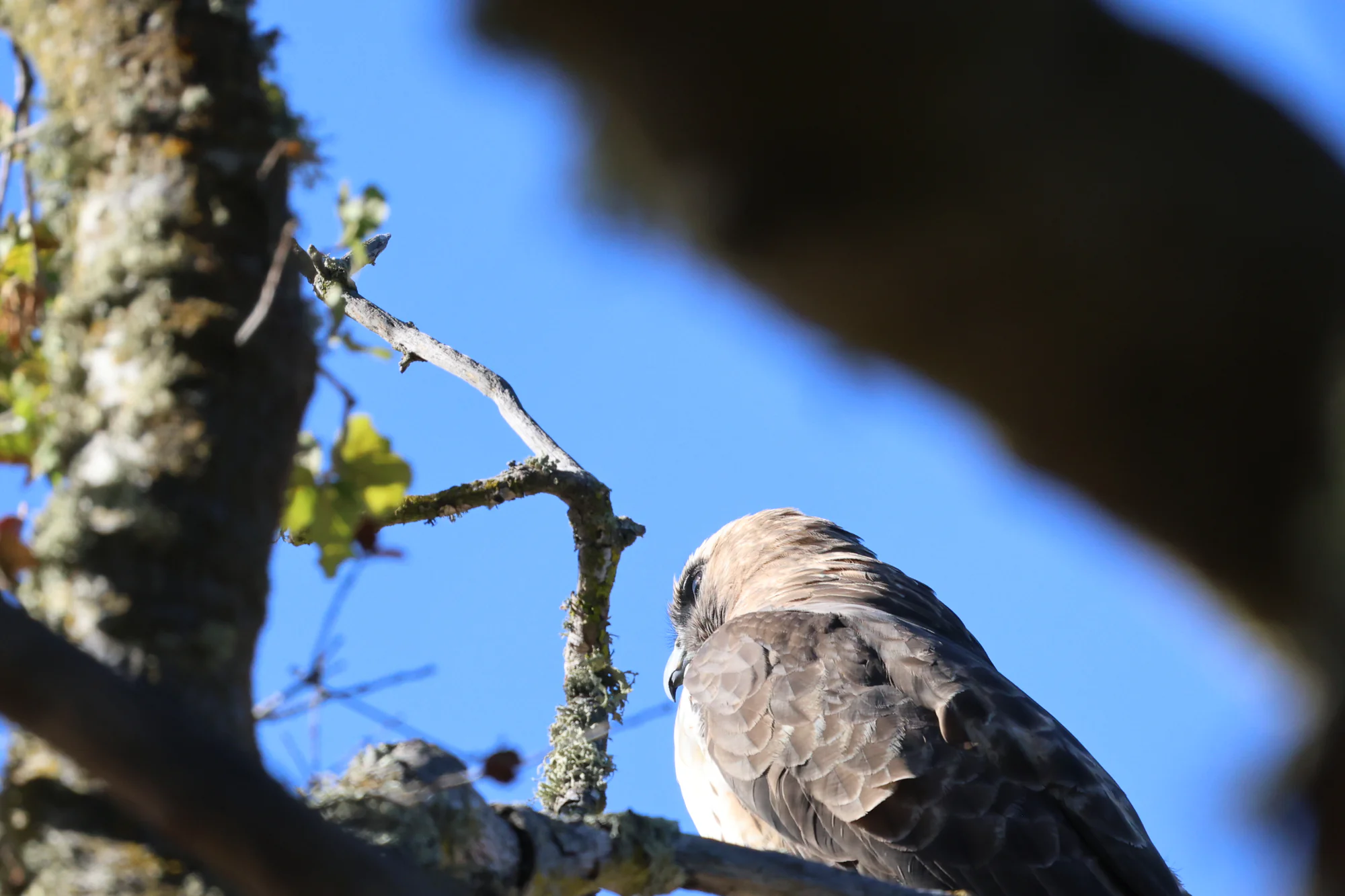
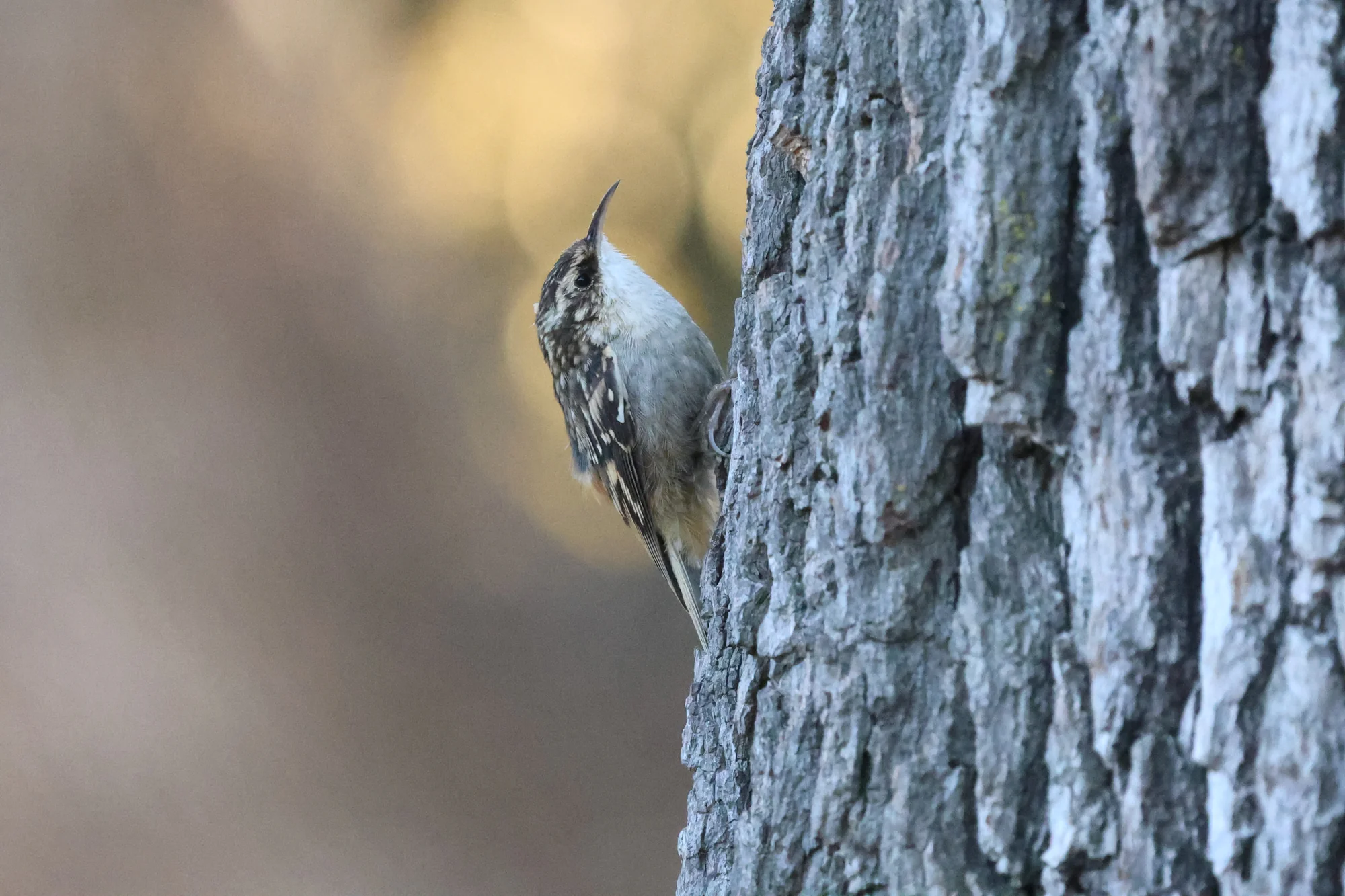
The tree trunks had their own occupants. A Nuttall’s Woodpecker brought black-and-white patterning and a splash of red, while a Brown Creeper seemed almost to merge with the bark. Higher in the branches, a hawk gave us a much larger subject. It looks most like a Red-tailed Hawk, although the partly hidden view leaves that identification tentative. Its relaxed pose, at least, needs no further verification.
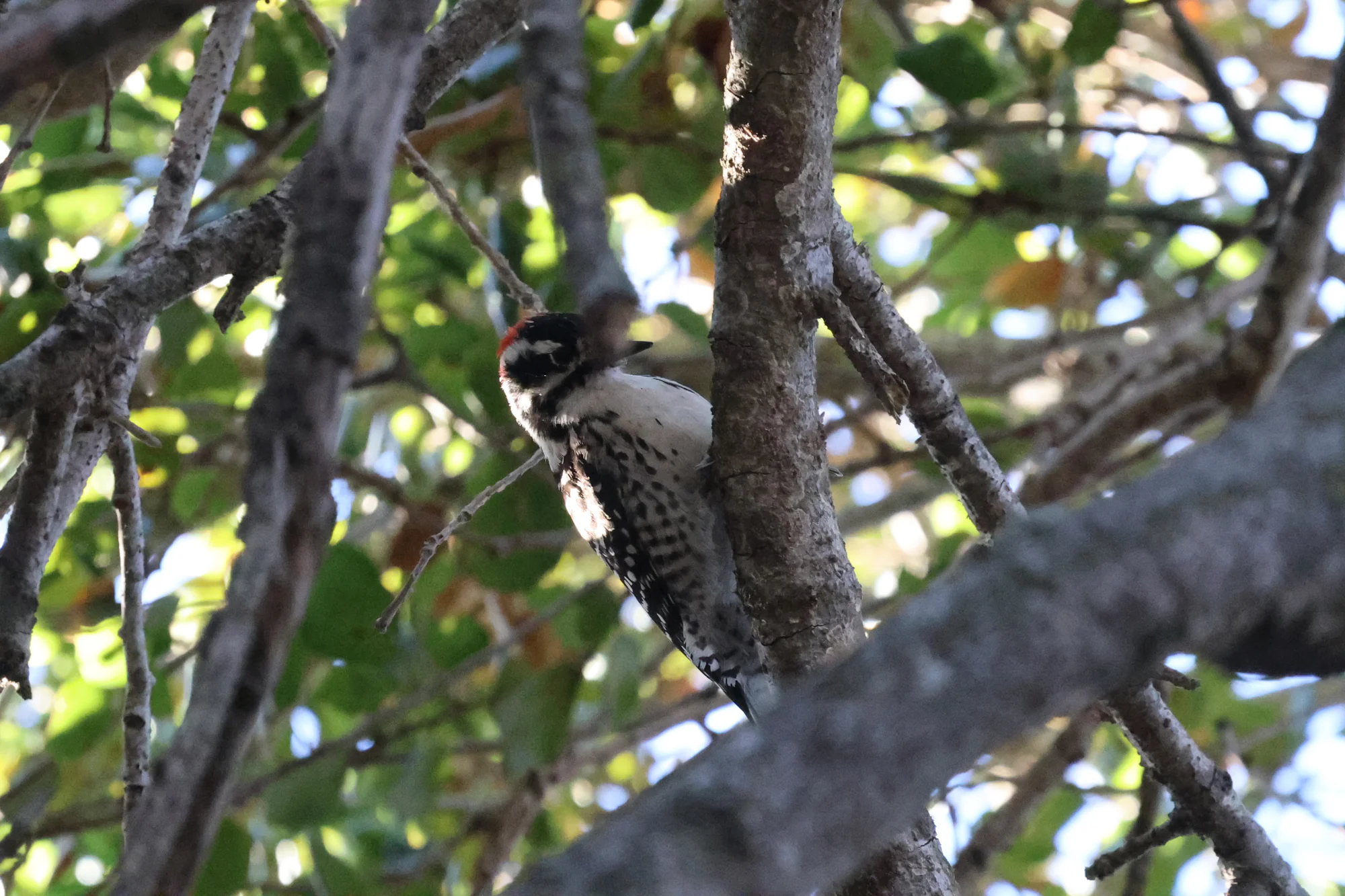
A Nuttall’s Woodpecker clinging to a tree trunk, with black-and-white plumage and red on the back of its head.
Nuttall’s Woodpecker (Dryobates nuttallii). Black and white, with just enough red to stand out from the branches.
A Brown Creeper clinging upright to a tree trunk, with a slender curved bill and mottled brown-and-white plumage.
Brown Creeper (Certhia americana). So well matched to the bark that the tree seems to have grown a beak.
A large brown hawk, tentatively identified as a Red-tailed Hawk, resting on a branch against blue sky, partly hidden by foreground branches.
Probable Red-tailed Hawk (Buteo jamaicensis). Taking the afternoon at a calmer pace. The identification is tentative because the branches hide several useful features.

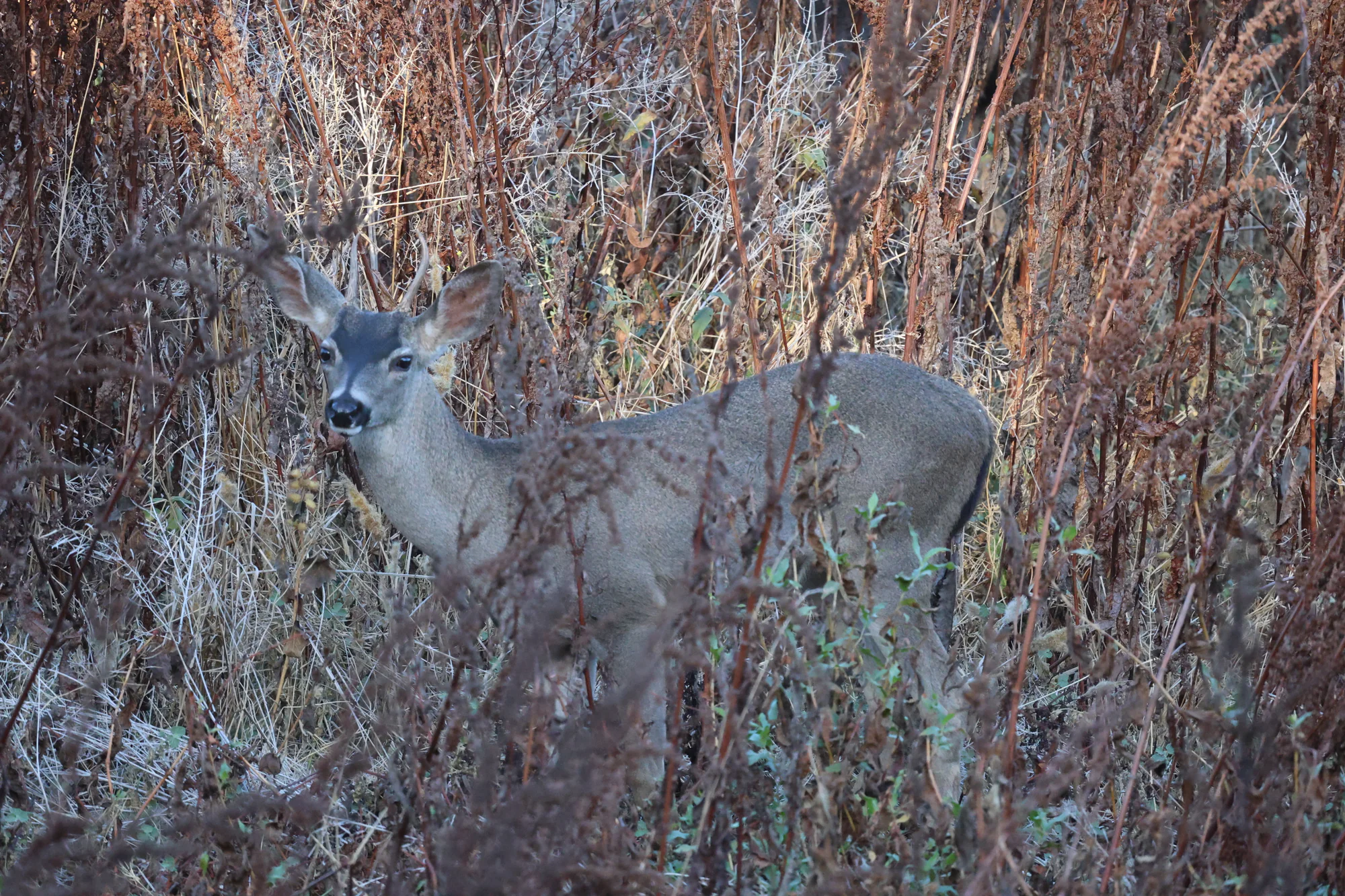
Our birdwatching afternoon also came with two guests who had skipped the wings entirely: a Coyote in the dry grass and a Mule Deer looking back through the stems. Both fit so neatly into the colours of the landscape that the photographs feel like small discoveries all over again. Apparently, joining a birdwatching walk can be a very good way to meet the rest of the neighbourhood too.
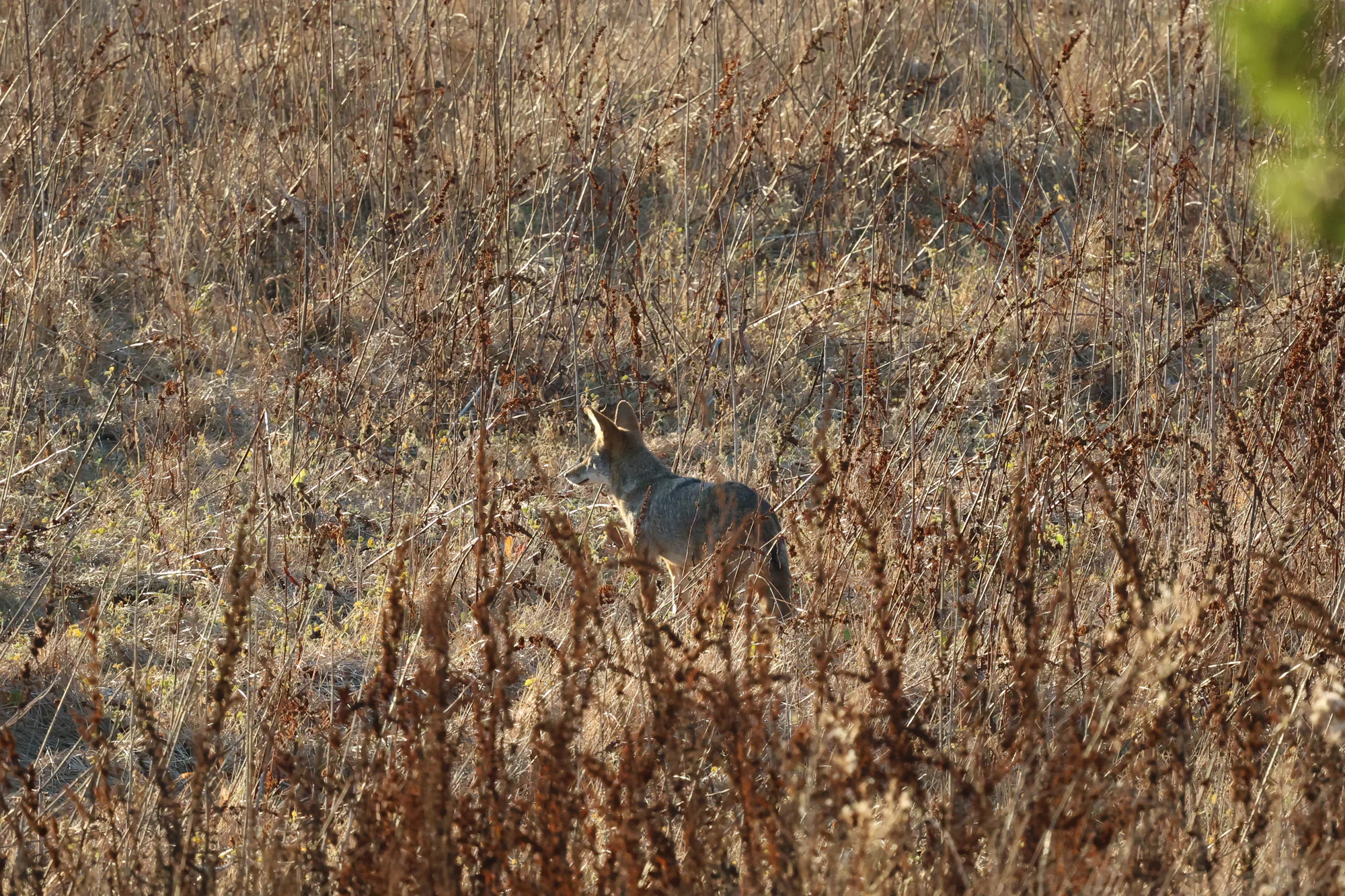
A Coyote with a grey back and reddish ears standing partly concealed in sunlit dry grass.
Coyote (Canis latrans). An unexpected guest, wearing the afternoon’s colours rather well.
A Mule Deer with large upright ears looking toward the camera through tall dry stems.
Mule Deer (Odocoileus hemionus). Another neighbour in the grass, returning the photographer’s curious look.

Hoover Tower made it into the camera as well, keeping a familiar place in an afternoon full of new names. I came away with photographs, a little more practice at looking, and a lovely new reason to spend time outdoors with other people. Lake Lagunita is already on campus; I suspect I will now find considerably more excuses to go back.
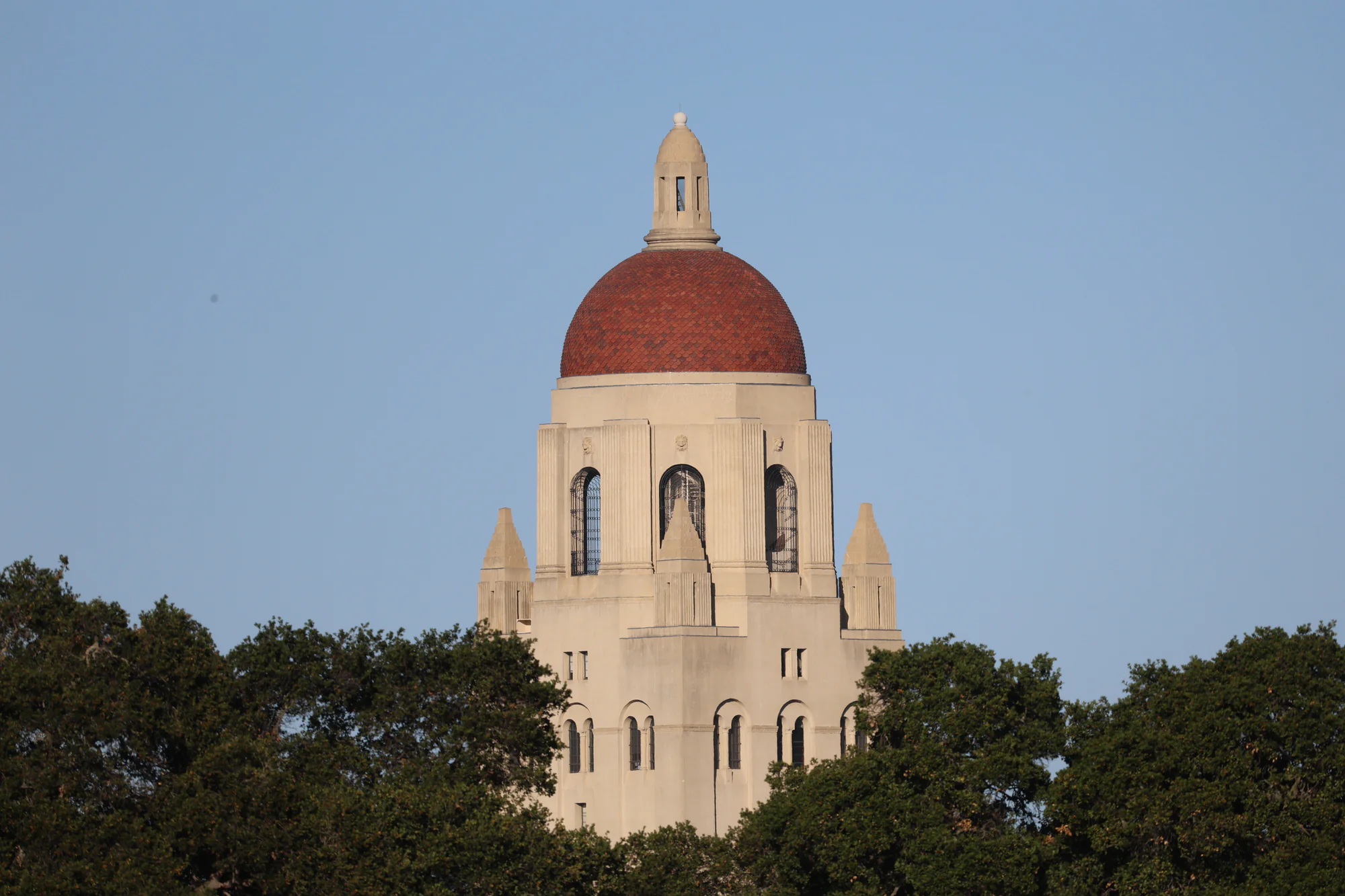
Stanford’s Hoover Tower with its red-tiled dome rising above green trees against a blue sky.
Hoover Tower, Stanford University. The easiest subject of the afternoon to persuade to stay still.

Visit the source

← Back to all updates

Contact

Email Xiaoguang Wu

Open Email App